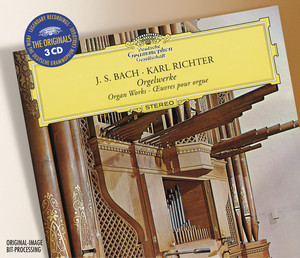
Passacaglia and Fugue in C Minor, BWV 582
Song DNA
A profound and intricate work for organ that showcases Bach's mastery.
Cultural Context
Often regarded as one of the pinnacles of organ music.
Listening Prompt
Notice the evolution of themes throughout the piece.
What to Expect
A gradual build-up leading to a climactic fugue.
Hear it the way it was made
The right gear changes everything.
Moods: cathartic, melancholy
How this song sits on each sensory axis
A dynamic range of 8/10 is in the upper band of our library. This song has a significant quiet-to-loud arc. For sensory-sensitive listening, set the opening volume well below your comfortable top-end; the climax will land harder than the intro suggests.
Sudden changes: present. This song uses surprise as a feature. For focus or background listening, it's likely to pull your attention away; for active listening, that's often the point.
Texture: complex.
Predictability is low — this song does not follow standard verse-chorus form closely, and rewards active listening more than passive listening.
Vocal style: instrumental.
Where this sits in Johann Sebastian Bach's catalog
We have 26 songs from Johann Sebastian Bach in the library. Of those, 11 are rated Safe, 8 Moderate, and 7 Intense. This song's dynamic range of 8/10 sits above the artist average of 6.3, making it the #6 most dynamic track of theirs in our library.
Explore by mood and tradition
Why this rating
We rate this song Intense. Our rule is deliberately conservative: any one of high dynamic range, present sudden changes, harsh texture, or a strained/screamed vocal is enough to trigger Intense on its own. Full scoring rubric: methodology.
Rating last reviewed: 2026-04-05. Reviewed by the Music I Want editorial team against the documented methodology.
Think this rating is wrong? Email the editor — every message is read and ratings get revised.
Frequently asked about "Passacaglia and Fugue in C Minor, BWV 582"
Quick answers pulled from the song's sensory analysis.
What is the sensory intensity of "Passacaglia and Fugue in C Minor, BWV 582" by Johann Sebastian Bach?
"Passacaglia and Fugue in C Minor, BWV 582" by Johann Sebastian Bach rates as Intense. Dynamic range 8/10, moderate sudden changes, complex texture, instrumental vocal style. Any one of high dynamic range, present sudden changes, or harsh texture triggers the Intense rating.
How loud is "Passacaglia and Fugue in C Minor, BWV 582" — what is its dynamic range?
"Passacaglia and Fugue in C Minor, BWV 582" has a dynamic range of 8/10. Substantial quiet-to-loud arc. Start at a volume well below your top-end; the climax will land harder than the intro suggests.
Does "Passacaglia and Fugue in C Minor, BWV 582" have sudden or surprising changes?
Yes. "Passacaglia and Fugue in C Minor, BWV 582" uses surprise as a compositional feature. Expect unsignaled transitions.
What is "Passacaglia and Fugue in C Minor, BWV 582" best for?
In our library "Passacaglia and Fugue in C Minor, BWV 582" is recommended for: deep listening, emotional release. These tags are assigned only where the song's sensory profile genuinely supports the use case.
What is the emotional mood of "Passacaglia and Fugue in C Minor, BWV 582"?
We tag "Passacaglia and Fugue in C Minor, BWV 582" as cathartic, melancholy. Moods are tonal descriptors based on how the song reads emotionally — separate from the sensory intensity axes.
What is the vocal style of "Passacaglia and Fugue in C Minor, BWV 582"?
The vocal style is instrumental.
Should I listen to "Passacaglia and Fugue in C Minor, BWV 582"?
"Passacaglia and Fugue in C Minor, BWV 582" is Intense in our ratings — dramatic dynamics, possible sudden changes, or strong vocal or textural energy. Best with intention rather than ambient use. If you are sensory-sensitive, the alternatives section surfaces calmer songs in the same mood family.
Songs with the same DNA
complex texture, similar intensity — across any genre or era.
Safer alternatives with a similar feel
These songs share similar moods but with a gentler sensory profile.
What this song means to people
No stories yet. Be the first.