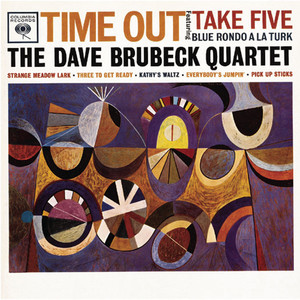
Take Five
Take Five by Dave Brubeck is 170 BPM — Vivace (lively).
Half-time 85 BPM · Double-time 340 BPM · released 1959
Song DNA
Right in the middle of our energy scale. This one rises and falls a fair amount with just a little movement, over a layered texture. No vocals to track — it’s fully instrumental, at a fast pace. Mostly steady, it still leaves a little room to surprise. Against the 19,209 songs we’ve measured, it sits more energetic than 39% of songs, calmer than the rest.
Cultural Context
Dave Brubeck's 'Time Out' introduced unusual time signatures in jazz, making it a landmark album. 'Take Five' became iconic for its 5/4 time and memorable saxophone melody.
Listening Prompt
Enjoy the playful rhythms and allow yourself to be carried away.
What to Expect
Starting with a catchy piano riff, the piece quickly introduces the saxophone melody, captivating listeners. The middle section features improvised solos, while the ending returns to the main theme, leaving a sense of joy.
Hear it the way it was made
The right gear changes everything.
Moods: playful
Traditions: jazz
"Take Five" runs at 170 BPM — fast run territory.
For runners: match cadence to BPM and the song does half the work. Texture stays layered; vocals sit instrumental. Nothing in the arrangement asks for your attention mid-stride. Good as a steady-state track; less useful for interval work where you want explicit tempo shifts.
How this song sits on each sensory axis
A dynamic range of 6/10 means this song moves. Expect a real volume climb between quiet sections and the loudest part of the arrangement — enough that you may want to set the initial volume below where you'd normally land.
Sudden changes: mild. There are one or two transitions worth knowing about, though they're musically resolved rather than surprise-driven.
Texture is layered — a full arrangement with clear separation between parts.
Predictability is medium — conventional structure overall, with one or two moments that deviate from what you'd expect.
Vocal style: instrumental.
1959 context
Released in 1959. We have 96 songs from that year in our library, averaging a dynamic range of 5.9/10. This track is about average than the year average. Explore more from the 1950s.
Explore by mood and tradition
How fast is "Take Five"?
170 BPM — Very fast (intense cardio / drum and bass)
Fast-pace running. Great for tempo runs and speed work.
Sprint sets, fast-twitch training, max-effort bursts.
Active tasks, getting pumped up, party, anything high-energy.
Browse more songs at 170 BPM.
When "Take Five" works, and when it doesn't
Use-case verdicts computed from the song's tempo, dynamics, and sensory profile.
Maybe — fine for routine work, but the mid-song changes may pull attention during deep focus.
Yes — 170 BPM sits squarely in the running / cardio band. Matches natural stride cadence.
No — contains elements that will keep an awake nervous system engaged.
Yes — predictable enough for safe driving attention, interesting enough to stay engaged.
Yes — sits in the background without demanding attention.
Not really — it's pleasant but doesn't hit hard enough for cathartic listening.
Related reading
Editorial guides that cover this song's use cases, moods, or artist.
Drum and bass is pure chaos — so why does it calm a restless mind?
170 BPM and relentless breakbeats, yet it is the most focused some people ever feel. The sensory logic behind why drum and bass works: high …

Why Post-Rock Works for Focus — The Logic of Slow Builds
Why post-rock holds attention that slides off everything else: long builds, few sudden changes, and enough happening to occupy the part of y…

How to Build the Perfect Focus Playlist for Work — A Sensory-Rated Approach
How to Build the Perfect Focus Playlist for Work — A Sensory-Rated Approach — A guide for sensory-sensitive listeners on musiciwant.com
Why this rating
We rate this song Moderate because it falls between our Safe and Intense thresholds on at least one dimension. Moderate is the default for most well-produced music that has real arc but no surprise elements. Full rubric: methodology.
See how “Take Five” sits against your own sensitivities, or use it as a waypoint in a calmer set.
Listen on
Spotify and YouTube links go direct to the track when we have the ID; otherwise they search for it. Embed this sensory profile on your site →
Rating last reviewed: 2026-04-03. Reviewed by the Music I Want editorial team against the documented methodology.
Think this rating is wrong? Contact the editor — every message is read and ratings get revised.
By the numbers: how this song compares
Computed from this song’s place among the 19,209 songs we’ve measured.
Where it sits in 19,000 songs
On our 19k-song scale this lands in the middle band — more energetic than 39% of songs, calmer than the other 61%. Its intensity reading of 43/100 comes from a dynamic range of 6/10, layered texture, mild shifts, and instrumental. It shares this stretch of the spectrum with thousands of other tracks, so the finer fingerprint below is what really separates it.
What makes it unusual
What stands out most about this song is a fast, driving tempo: more extreme on that axis than 97% of everything we've measured. At the far opposite end of the library sit the songs built on near-total stillness — steady volume, no surprises, a slow and unhurried pulse — the kind of track this one is the counterpoint to.
Feels almost identical to
Closest matches by feel across all 19,209 measured songs — not by genre or artist, by how they actually move.
What it’s good for
Scored from this song’s tempo, intensity, dynamics and texture — not crowd votes.
1959 in context
The 96 songs we’ve measured from 1959 average a dynamic range of 5.9/10. At 6/10, this track is right in line with its year.
Mixes smoothly with
Within a few BPM and close in feel — they flow without a jarring transition.
The fingerprint
The 8-dimension measurement behind every rating on this page.
Frequently asked about "Take Five"
Quick answers pulled from the song's sensory analysis.
What is the BPM of "Take Five" by Dave Brubeck?
"Take Five" by Dave Brubeck has a tempo of 170 BPM (Vivace (lively)). At half-time that is 85 BPM, and at double-time 340 BPM.
What is the sensory intensity of "Take Five" by Dave Brubeck?
"Take Five" by Dave Brubeck rates as Moderate intensity. Dynamic range 6/10, mild sudden changes, layered texture. Moderate is the default for well-produced music with real arc but no surprise elements.
How loud is "Take Five" — what is its dynamic range?
"Take Five" has a dynamic range of 6/10. Noticeable climb from quiet sections to loudest point. Set opening volume slightly lower than your preferred peak.
Does "Take Five" have sudden or surprising changes?
"Take Five" has mild sudden changes — one or two transitions worth knowing about, but they are musically resolved rather than surprise-driven.
What is "Take Five" best for?
In our library "Take Five" is recommended for: focused work. These tags are assigned only where the song's sensory profile genuinely supports the use case.
When was "Take Five" released?
"Take Five" is from 1959, on the album "Time Out". It appears in our 1950s catalog.
What is the emotional mood of "Take Five"?
We tag "Take Five" as playful. Moods are tonal descriptors based on how the song reads emotionally — separate from the sensory intensity axes.
What is the vocal style of "Take Five"?
The vocal style is instrumental.
Is "Take Five" good for running?
Yes — at 170 BPM it sits in the running-cadence band (120-180 BPM). Match your stride to the beat and it keeps pace with most recreational runners.
Is "Take Five" good for studying?
Only partially. The song's dynamic range (6/10) means there will be loud moments that break focus during deep work.
Can I use "Take Five" for sleep?
Not recommended for sleep. Contains transitions that will wake you up.
Should I listen to "Take Five"?
"Take Five" is Moderate intensity — fine for most listeners, but with enough dynamic activity that it works best as active listening rather than background.
Songs with the same DNA
layered texture, similar intensity — across any genre or era.
Safer alternatives with a similar feel
These songs share similar moods but with a gentler sensory profile.
What this song means to people
No stories yet. Be the first.
Share what this song means to you
Keep exploring
You know how this one feels — now go find the next one.