The cracked voice — why a singer breaking undoes you faster than the lyrics
By Dan Cohen · Published 2026-06-23
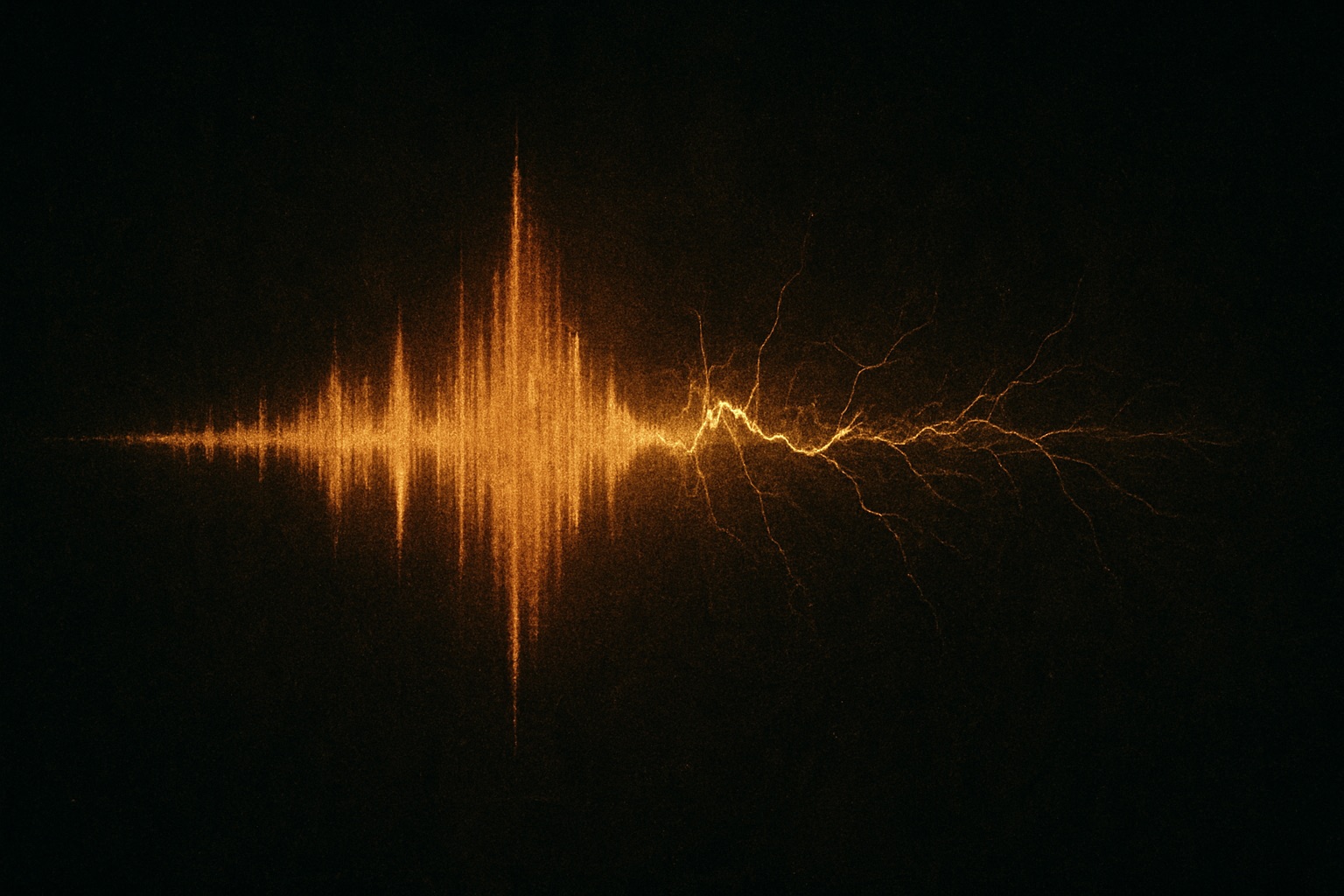
Listen to the moment in Jeff Buckley's "Grace" where his voice climbs past where a voice should comfortably go and frays. Or the third time Johnny Cash sings "you could have it all" on "Hurt," when the old man's throat gives out a little on all. You felt that before you understood a single word. Your chest did something. That reaction has a name, and it has almost nothing to do with the lyrics.
The critic Roland Barthes called it the grain of the voice — the body audible inside the singing, the friction of a real throat doing a hard thing. It is, I'd argue, the single most physical element in all of recorded music, and the one our vocal style rating exists to measure.
What "grain" actually is
Grain is what happens when a voice stops being clean. Acoustically, it's a cluster of measurable imperfections:
- Roughness and subharmonics — the vocal folds vibrating irregularly, producing the rasp, the growl, the catch.
- Jitter and shimmer — tiny instabilities in pitch and loudness from one cycle to the next. A perfectly tuned synth has none. A human under strain has plenty.
- Breathiness — air leaking through the folds, the sound of effort or intimacy or exhaustion.
- The break — the audible seam where the voice flips registers or simply runs out of road.
A pitch-corrected pop vocal sands all of this away. That's why it can be beautiful and still leave you cold: there's no body in it to recognize.
Why your body reacts before your brain
Long before humans had words, we had voices that cracked. A trembling, breaking voice is an honest signal — it's almost impossible to fake the involuntary catch of real distress. Our nervous systems are tuned, deep below conscious thought, to read vocal grain as this person is feeling something they cannot fully control.
So when a singer's voice breaks, you're not interpreting a metaphor. You're responding to what reads as a genuine emotional signal from another human, on the same fast pathway that makes you wince at a stranger's sob across a room. The meaning of the words arrives a beat later. The grain gets there first.
When grain becomes too much
Here's the part most music writing skips: for sensitive listeners, vocal grain isn't always a gift. The same raw, unstable, high-effort voice that wrecks one person in the best way can read as genuinely distressing to another — too close, too exposed, too much like real-life upset. If you find that screamed or cracking vocals spike your tension rather than your goosebumps, that's not you "not getting it." That's your threat-detection working exactly as designed.
This is why a single sensory number for a song is never enough. A track can be quiet, slow, and texturally soft — and still carry a vocal that's emotionally enormous. The arrangement says calm; the voice says brace.
That's the gap our ratings are built to catch. Run any song through the checker to see its vocal style scored separately from its dynamics and texture, browse the library for voices that match what you're after, or use the finder to filter toward clean, steady vocals — or straight into the grain, if that's the catharsis you came for.
Know before you press play
Every song on Music I Want is rated across five sensory dimensions — dynamic range, sudden changes, texture, predictability, and vocal style — so you can tell how a track will actually land before it starts.