Neoclassical piano — the calmest corner of modern music
By Dan Cohen · Published 2026-06-23
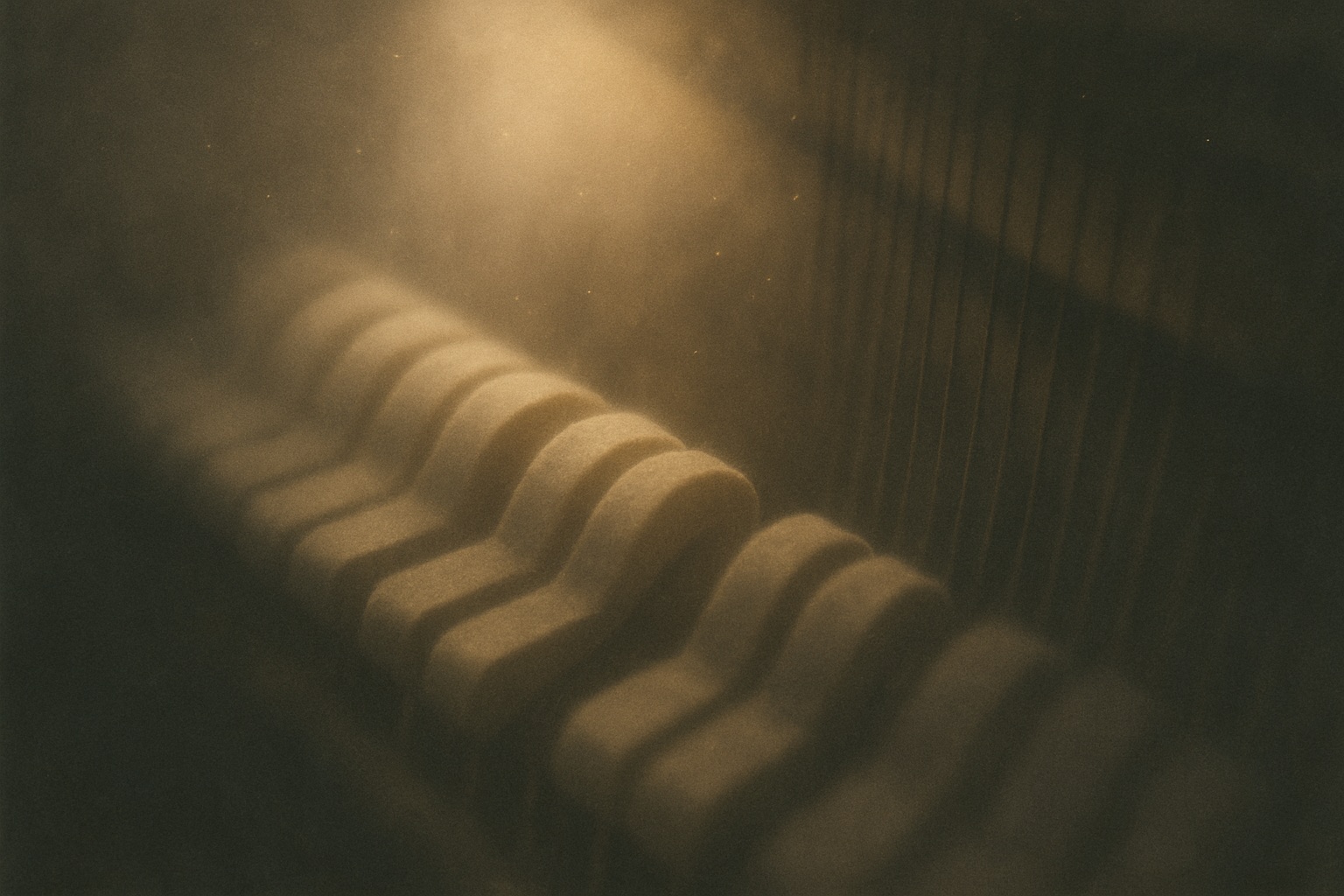
Somewhere in the last fifteen years, a quiet genre slipped into millions of headphones under the cover of "focus" and "sleep" playlists. You know it even if you've never named it: a felt-dampened piano, a few held string notes, a tempo that never hurries, recorded so close you can hear the hammers and the pedal. This is neoclassical piano — sometimes called modern classical, post-classical, or neoclassical ambient — and it might be the calmest corner of all recorded music.
It sounds like classical music. It mostly isn't. And the difference is the whole reason it works on a tired nervous system.
Why it feels so safe
Real Romantic-era classical is a rollercoaster — that's the point of it. A Beethoven symphony will whisper for two minutes and then detonate, and the contrast is the drama. Neoclassical piano keeps the surface and removes the rollercoaster. On every dimension that usually spikes a sensory load, it sits low:
- Narrow dynamic range. It rarely gets loud, and when it swells it does so slowly, with plenty of warning. Nothing detonates.
- High predictability. Pieces are built on repeating cells and slow harmonic loops. Your brain quickly learns where it's going and stops bracing.
- Soft texture. The famous "felt piano" sound — a strip of felt over the strings — turns every note into a muffled thud instead of a bright strike. Nils Frahm built a whole aesthetic on it.
- Almost no sudden changes. Transitions are dissolves, not cuts. There's nothing to flinch at.
Where to start
- Ólafur Arnalds — some kind of peace. Strings and piano, warm and unhurried, the gentlest possible doorway in.
- Nils Frahm — Felt, recorded at night on a muffled piano specifically so he wouldn't disturb his neighbors. The whole album is built from quietness.
- Max Richter — Sleep, eight hours of music engineered, with a neuroscientist, to be slept through. There is no more literal "music as a weighted blanket" than this.
- Arvo Pärt — Alina. Older and more austere; his "tintinnabuli" style is so spare it can feel like architecture for the ears.
The honest caveat
Don't assume "neoclassical" automatically means "low intensity." This is exactly the trap of assuming classical is always calm. Max Richter's "On the Nature of Daylight" — the piece from every grief scene in every film — builds to a genuine emotional swell that can absolutely overwhelm. Some of Arnalds' work blooms into drums and big strings. The genre tends gentle, but it has peaks, and the peaks are where it earns its tears.
So treat the label as a starting point, not a guarantee. The safest move is to check the actual track, not the genre tag on it. Run a piece through our song checker to see its real dynamic range and predictability, browse the library for rated calm-piano picks, or use the finder to dial in exactly how still you need the music to be tonight.
Know before you press play
Every song on Music I Want is rated across five sensory dimensions — dynamic range, sudden changes, texture, predictability, and vocal style — so you can tell how a track will actually land before it starts.