The loudness war is why modern music tires you out
By Dan Cohen · Published 2026-06-30
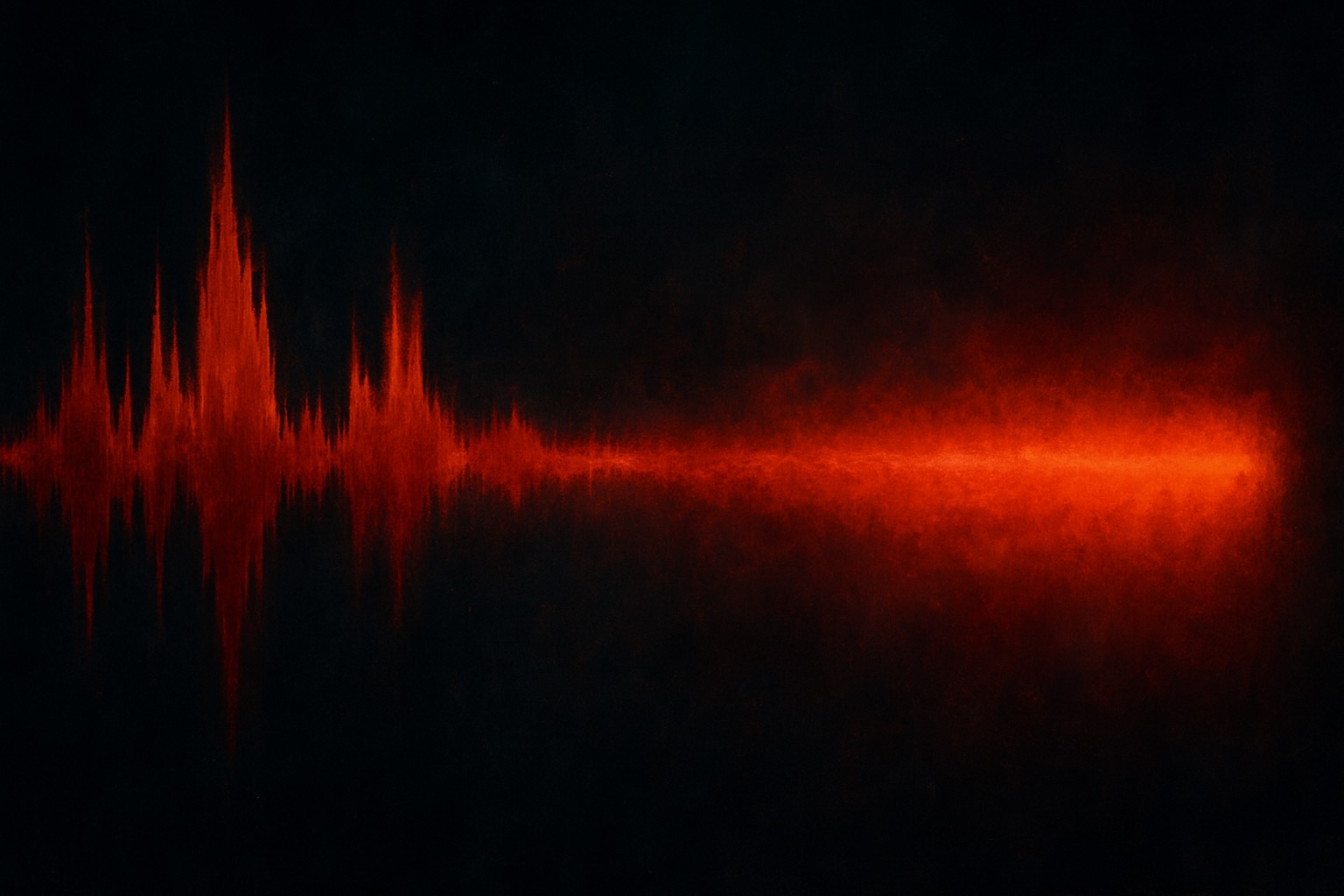
You put on an album from 1975, then a brand-new single, and you reach to turn the new one down. Not because it's a worse song — because it's louder, in a way that has nothing to do with the volume knob. After half an hour your ears feel tired and you can't say why. That fatigue has a name and a cause, and once you can hear it, you can't un-hear it.
What "loudness war" actually means
Recorded music has a built-in ceiling: the loudest a digital file can get. The quiet parts and the loud parts of a song live in the gap below that ceiling — that gap is the dynamic range. A drum hit that jumps out, a verse that drops to almost nothing: those need headroom to breathe.
Starting in the 1990s and peaking in the 2000s, mastering engineers were pushed to make records hit harder than the competition on the radio and in playlists. The tool for that is compression and limiting — squashing the quiet parts up toward the loud parts so the whole track sits jammed against the ceiling. Louder average volume, yes. But the cost is the range. The peaks and valleys get ironed into a plateau.
Why a flat plateau tires your body
Your hearing is built to track contrast. A sudden loud sound against a quiet background triggers a fast, involuntary response — it's older than thought, the same reflex that flinches at a slammed door. When music has real dynamic range, your nervous system gets to ride those swells and rests: tension, release, tension, release. That motion is a lot of what makes music feel good.
Strip the range out and every second arrives at roughly the same intensity. There's no rest. Your auditory system has nowhere to relax, so it stays braced the whole time. That's the fatigue — not volume exactly, but relentlessness. For sensory-sensitive listeners it's worse than tiring; a wall of constant loudness with no dips can tip straight into overload.
- The tell-tale sign: you keep nudging the volume down but it never feels comfortable, only quieter.
- The drum test: on a heavily compressed master, the snare doesn't punch — it's already as loud as everything else, so it loses its impact.
- The 30-minute test: dynamic music can play for hours; a brick-walled master starts to ache surprisingly fast.
It's not "old good, new bad"
Plenty of modern records are mastered with care and breathe beautifully — and plenty of classic albums were squashed in remasters. Streaming has actually pushed back on the worst of it: services now turn everyone down to a shared loudness target, which quietly removes the reward for crushing a track. A song with real dynamics and a brick-walled one now play back at the same perceived level, and the dynamic one simply sounds better.
The point isn't nostalgia. It's that "loud" and "intense" are not the same thing, and your body knows the difference even when your eyes are reading the same volume number.
Listen for the range, not the level
Next time a track wears you out, don't assume you're just tired or oversensitive. Ask whether it ever gets quiet. The most physically comfortable music isn't the softest — it's the music with room to move, where a loud moment means something because a quiet one came before it.
Dynamic range is one of the five dimensions we score on every song, precisely because it's the one most likely to fatigue or overwhelm a listener. Browse the library filtered for gentle, wide-ranging tracks, or drop a song that always tires you out into the checker — you may find the problem was never the volume.
Know what a song will do before you press play
Every track on Music I Want is rated across five sensory dimensions — dynamic range, sudden changes, texture, predictability and vocal style — so the swings never catch you off guard.
Check any song → · Find your next track → · Browse the library →