Gamelan: the shimmering metal music that bends your sense of time
By Dan Cohen · Published 2026-07-02
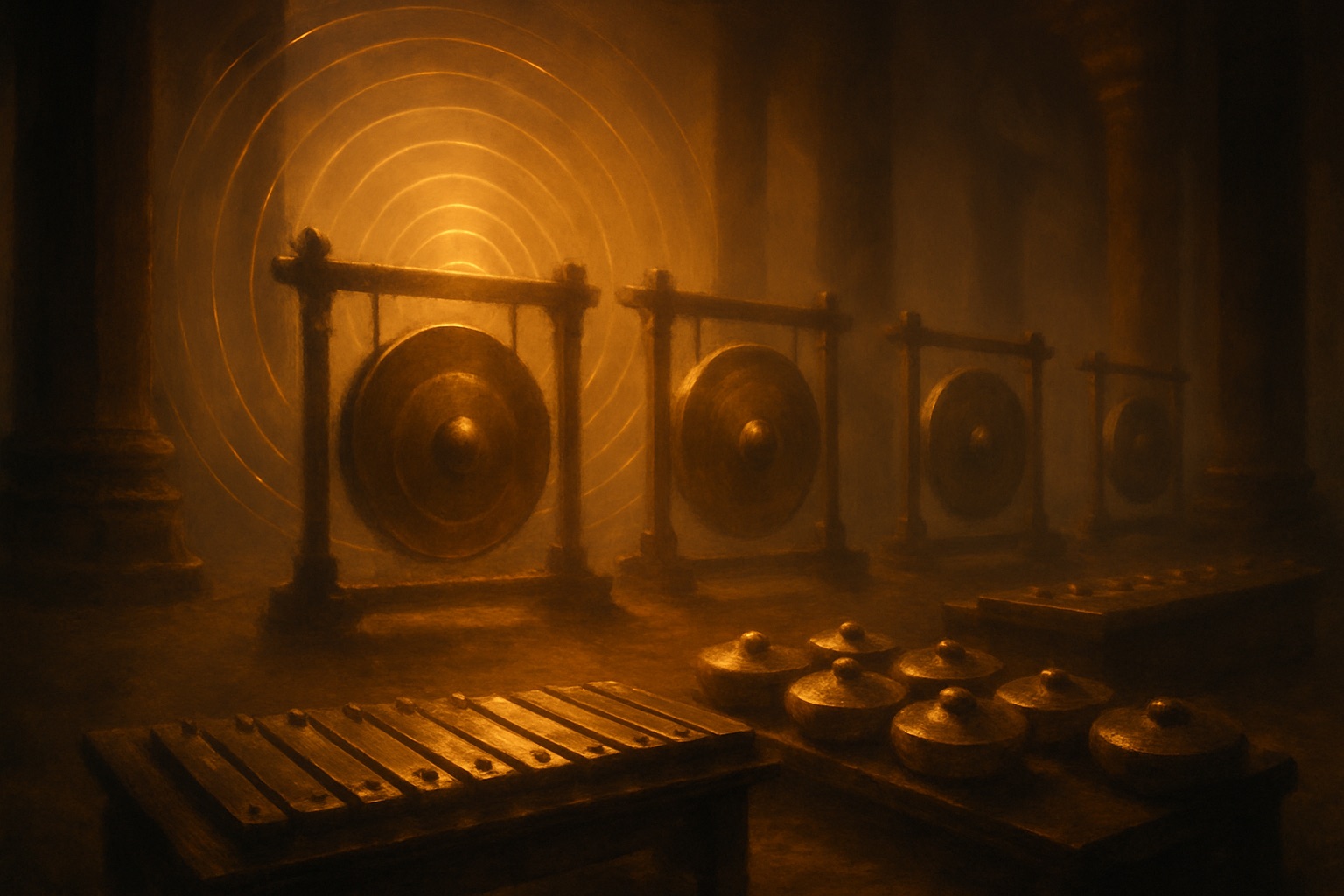
Somewhere in a village on Java or Bali right now, a room full of bronze is being struck in perfect, overlapping time — and if you stood in the middle of it, you would feel your sense of "the beat" quietly dissolve. Gamelan is the oldest orchestra most Western listeners have never really heard, and it does something almost no other music does: it makes time feel like water instead of a metronome.
What a gamelan actually is
A gamelan is not an instrument. It's a whole set of them — tuned bronze gongs, metallophones (metal keys over resonators), drums, and sometimes bamboo flutes and a two-stringed fiddle — built and tuned as a single object. You don't buy a gamelan key by key. The whole ensemble is forged together so that its notes ring against each other in a way no two other gamelans quite share. That's the first thing to know: it's a texture with a body, not a scale you can transcribe onto a piano.
The shimmer is the point
Listen to a sustained gamelan chord and you'll hear it breathe — a slow pulsing wobble, like the sound is inhaling and exhaling. That's not reverb and it's not an effect. Each note is played on two instruments tuned very slightly apart, one a hair sharp, one a hair flat. The two pitches beat against each other and create that living shimmer, called ombak ("wave"). It's the same physics that makes a detuned synth pad sound lush, except here it's baked into bronze and centuries of tradition. For a sensory listener, this is worth flagging: gamelan is bright and metallic but rarely harsh — the energy is spread across a shimmering cloud rather than stabbed at you in sharp transients.
Music with no edges
Western pop is built on tension and release — a drop, a chorus, a payoff your body braces for. Gamelan, especially the older ceremonial forms, is built on interlocking. Two players trade notes so fast that neither is playing the full melody; together they weave a line that no single hand could manage. The result is music that seems to have no beginning and no end, only cycles nested inside cycles, marked by the deep gong ageng — the great gong whose boom resets the whole structure.
- Dynamic range: Balinese gamelan can lunge from near-silence to a bronze avalanche in a heartbeat — thrilling, but a lot for a sensitive nervous system. Javanese court gamelan is far gentler, closer to a slow tide.
- Predictability: High, in the best way. The cycles are strict, so once you feel the pulse, the music holds you rather than ambushing you.
- Texture: Dense, ringing, and continuous — this is not sparse music, but the density is soft-edged, like standing inside a struck bell.
Where to start
If you want the calm end, search for Javanese court gamelan — slow, ceremonial, almost meditative. If you want the fireworks, Balinese gong kebyar is the explosive cousin, all sudden stops and starts. And if you already love ambient, minimalism, or the shimmer of Steve Reich and Brian Eno, you're closer to home than you think — both of them borrowed openly from gamelan, and once you hear the source, you can't unhear it.
Gamelan asks you to stop waiting for the next thing and simply stand inside the sound. For a lot of listeners — especially the ones who find most music too jumpy, too demanding — that turns out to be exactly the invitation they needed. Browse our Library for more low-jolt textures, or tell our Finder you want "shimmering, no sudden changes" and see what surfaces.
Know before you press play
Every song on Music I Want is rated across five sensory dimensions — dynamic range, sudden changes, texture, predictability, and vocal style — so you can tell whether a track will hold you or ambush you. Analyze a song, browse the Library, or let the Finder match music to exactly the feeling you're after.